 Human Cheatcodes
Search "dark psychology book" and you will find hundreds of titles, most of them recycled lists promising mind control. A handful are genuinely useful — grounded in research, honest about limits, and mostly about protecting yourself. Here are the ones worth your time, grouped by what you actually want to understand.
Full disclosure: two books on this list are ours. They are marked.
First: what "dark psychology" actually means
It is not a formal field. It is a popular label for research that does exist — on persuasion, coercive control, deception, narcissism and psychopathy. The books below are the ones that stay close to that research. The rest of the genre is best avoided; there is a checklist at the end for telling them apart.
For recognising everyday manipulators
In Sheep's Clothing — George K. Simon
The most practical book on the kind of manipulation most people actually meet: not dramatic villains, but people who get their way through guilt, feigned innocence, minimising and playing the victim. Simon calls them covert-aggressive personalities, and his list of their tactics is one of the clearest you will find. Short, readable and immediately recognisable.
Emotional Blackmail — Susan Forward
Built around one idea — FOG: fear, obligation and guilt — and how the people closest to us use all three to get their way. Especially good for family and relationship dynamics, with scripts for responding.
For understanding the genuinely dangerous
Without Conscience — Robert D. Hare
By the researcher who developed the most widely used assessment of psychopathy. Hare explains what the condition is and is not, how such people present, and why they are so often charming. The authoritative popular book on the subject.
Snakes in Suits — Paul Babiak and Robert D. Hare
The same research, applied to the workplace: how people with psychopathic traits get hired, promoted and protected, and the patterns that give them away inside organisations.
The Sociopath Next Door — Martha Stout
A clinical psychologist's case that people without conscience are more common than we assume — Stout estimates around one in twenty-five — and a set of practical rules for dealing with them. More accessible than Hare, and more focused on ordinary life.
The Gift of Fear — Gavin de Becker
Not strictly "dark psychology", but essential: a security expert on trusting the signals that something is wrong, and the pre-incident behaviours that often come before violence. The book most likely to be genuinely protective.
For the mechanics of influence
Influence — Robert Cialdini
The research-backed foundation under most "dark psychology" tricks: reciprocity, commitment, social proof, liking, authority, scarcity and unity. Once you have read it, a large share of the genre reads like a watered-down version of Cialdini without the sources.
The practical overview
The Unfair Advantage — Arshpreet Singh (ours)
The Unfair Advantage puts much of the above in one place and one sitting: how people read each other, the six levers of influence, the manipulator's playbook, the dangerous few, power and respect. It is framed as self-defence, and each chapter ends with a summary and codes you can use the same day. It is short — about two hours — which is its strength and its limit: for depth on psychopathy, read Hare. See what is inside.
SN1001 — Human Cheat Codes (ours)
SN1001 is the reference version: 1,001 numbered patterns, with whole chapters on manipulation, gaslighting, control, lies, narcissists and dangerous people. Every code states its limits, and the pressure tools are labelled as pressure tools. See what is inside.
How to spot a low-quality dark psychology book
- It promises control. "Make anyone obey you", "hypnotise people in conversation". People do not work like that.
- No names, no sources. Real findings come from real researchers. If none are named, the book is probably a rewrite of other rewrites.
- No limits. Every genuine technique fails in some situations. A book that never says so is selling, not teaching.
- Only offence. The valuable books spend most of their pages on recognising tactics. A book that is only about using them on others is telling you what it is for.
If you are reading these books because someone in your life frightens you, a book is not enough. Talk to someone you trust, or a professional. In the US, the National Domestic Violence Hotline is 800-799-7233.
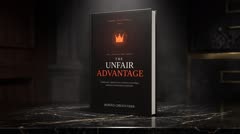
The Unfair Advantage: one two-hour read. Chapter One is free and complete.
Read chapter one free →Common questions
What is the best dark psychology book?
For everyday manipulators, In Sheep's Clothing. For psychopathy, Without Conscience. For influence, Influence. For a short practical overview, The Unfair Advantage.
Is dark psychology a real field?
Not formally. It is a popular label for real research on persuasion, coercive control, psychopathy, narcissism and deception.
How do I spot a low-quality one?
Promises of mind control, no named sources, techniques with no limits, and a focus only on controlling others.