 Human Cheatcodes
"Dark psychology" sounds like a skill that belongs to cult leaders and con artists. In practice it is a handful of very ordinary moves that work on very ordinary minds — and you will meet most of them this week, from a salesperson, a manager, a partner or a parent who would be offended to hear the word manipulation. Here are the seven that come up most, why each one works, and the line that stops it.
What makes a trick "dark"
Persuasion gives you accurate information and time to decide. Manipulation removes one or both. Every technique below works by either hiding something you would want to know, or creating pressure so that you decide before you have thought. That is the whole test. If a request survives you saying "let me think about it and get back to you tomorrow," it was persuasion. If it collapses, it was not.
1. The small yes
What it looks like. A tiny, unobjectionable request — sign this, try this, just give me two minutes — followed by the real one. Charity fundraisers, salespeople and anyone asking a favour use it constantly.
Why it works. Once you have said yes to something, you start to see yourself as the kind of person who says yes to that kind of thing, and the second request feels like consistency rather than a new decision. Psychologists have been measuring this "foot in the door" effect since the 1960s and it is embarrassingly reliable.
"That first thing was fine. This is a different question, so I'll think about it separately."
2. Manufactured urgency
What it looks like. Only two left. Offer ends tonight. I need an answer before I leave the room. The deadline is always real for the other person and never for you.
Why it works. The fear of losing something is roughly twice as strong as the pleasure of gaining it, so a countdown turns a "maybe" into a "quick, before it's gone." Urgency also crowds out the slow part of your thinking — the part that would notice you do not actually want it.
"If it's gone tomorrow, then it wasn't for me. I don't decide under a clock."
3. The unasked-for favour
What it looks like. A gift, a free sample, a compliment, help you did not request — and then, a little later, a request of their own. The relative who "did so much for you." The colleague who covered for you once and reminds you monthly.
Why it works. Reciprocity is one of the deepest rules in every human culture: receive something and you feel a debt, whether or not you wanted what you received. Manipulators create the debt deliberately and then collect on it at a rate of their choosing.
"I appreciate what you did. I'd have done it without expecting anything back, and I'd like to think you did too."
4. Hot and cold
What it looks like. Intense warmth, attention and praise at the start — sometimes called love-bombing — followed by withdrawal, then warmth again, on a schedule you cannot predict. In romance it is the whirlwind that turns into walking on eggshells. At work it is the boss whose approval you are always one good week away from winning back.
Why it works. Rewards that arrive unpredictably create stronger attachment than rewards that arrive every time. It is the mechanism behind slot machines, and it is why people stay longest with the person who treats them well only sometimes.
"I've noticed I never know which version of you I'm going to get. I'm going to stop trying to earn the good one."
5. DARVO
What it looks like. You raise a problem. They deny it happened, attack you for raising it — your tone, your memory, your motives — and reverse the roles so that they are the victim and you are the offender. Ninety seconds later you are apologising and the original issue has vanished.
Why it works. Most people would rather be wrong than be cruel. Faced with a person who appears genuinely hurt, you back down to repair the relationship, and the manipulator learns that every complaint can be converted into an apology from you.
"We can talk about how I said it afterwards. Right now the question is still the one I asked."
6. Everyone agrees
What it looks like. "The whole team feels this way." "Your sister thinks so too." "Everyone's noticed." The invisible crowd is always on their side and never available to confirm it.
Why it works. Being out of step with a group feels dangerous at a level older than reason. Invoke a majority — real or invented — and most people fold without checking whether the majority exists. The move also isolates you: if everyone agrees, there is no one to ask.
"Then I'd like to hear it from them. For now, I'm talking to you, so tell me what you think."
7. The moving goalposts
What it looks like. You meet the condition. The condition changes. Lose the weight, then it is the clothes. Hit the target, then it is the attitude. Finish the project, then the brief was never really that.
Why it works. Effort already spent is the hardest thing in the world to walk away from. Every new hurdle feels cheaper than abandoning everything you have already cleared, so you keep clearing them — which is exactly the point. The finish line is not being moved by accident. It does not exist.
"We agreed what done looked like. I've done it. If the goal has changed, that's a new conversation, not a failure on my part."
Three habits that defeat all seven
Never decide under pressure
Every trick on this list needs speed. A single sentence — "I'll get back to you tomorrow" — removes it. Genuine opportunities survive a night's sleep. Manufactured ones do not.
Get it in writing
The invisible crowd, the shifting goal and the forgotten promise all live in spoken conversation. "Send me that in an email" is not rude. It is the sound of a manipulator's toolkit closing.
Stay on the original question
Attacks, tears, subject changes and counter-accusations are all attempts to move you off the thing you asked. You do not have to win the new argument. You only have to decline to have it, and say the original sentence again.
Most of them are not villains. They are people who found, usually young, that these moves worked, and never had to learn anything else. Naming the move calmly is often the first time anyone has held the mirror up. Some people change when that happens. For the ones who do not, the counters above still work — they just have to be repeated.
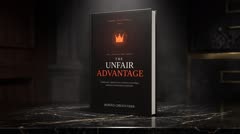
The Unfair Advantage is the dark psychology of people, power and influence — how you get read, moved and quietly manipulated, and how to turn it around — decoded from two hundred books into one two-hour read. Chapter One is free and complete.
Read chapter one free →Common questions
What is dark psychology?
The everyday use of ordinary mechanisms — reciprocity, consistency, scarcity, fear of loss, the need to belong — to move people towards a decision they would not make with clear information and no pressure.
Is dark psychology real or a myth?
The mechanisms are real and well documented. The myth is that they are secret or hard to resist. Once you can name the move as it happens, most of its power disappears.
How do you protect yourself from psychological manipulation?
Never decide on the spot when you feel pressure, ask for things in writing, and keep the conversation on the original question when someone tries to change the subject or make you the problem.
What is DARVO?
Deny, Attack, Reverse Victim and Offender: when confronted, the person denies it, attacks you for raising it, and recasts themselves as the injured party. The counter is to refuse the reversal and return to the original question.