 Human Cheatcodes
Most people who look for a book on boundaries already know what they should do. What they are missing is the reason it feels so hard, and the actual words to say when the phone rings. The best books give you both. Here they are, with who each one suits.
Full disclosure: one book on this list is ours. It is marked.
The modern guide
Set Boundaries, Find Peace — Nedra Glover Tawwab
A therapist's clear, warm guide to what boundaries are, the signs you need them, and how to set them with family, partners, friends and at work. The most accessible starting point for most readers, with prompts and exercises throughout.
Suits: anyone starting from scratch.
The classic
Boundaries — Henry Cloud and John Townsend
The book that made the word mainstream. It explains boundaries as a matter of ownership — what is yours to carry and what is not — and applies it to family, friends, spouses, children and work. Written from an explicitly Christian perspective, which some readers love and others find gets in the way.
Suits: readers comfortable with a faith-based framing.
For the habit of pleasing
The Disease to Please — Harriet B. Braiker
A psychologist on people-pleasing as a pattern of thinking, habits and feelings rather than a personality — where it comes from, what it costs, and a structured plan to change it.
Suits: people who say yes automatically and want to understand why.
Not Nice — Aziz Gazipura
A blunt, energetic book for chronic "nice" people on speaking up, disappointing others and tolerating the discomfort that follows.
Suits: readers who want a push, not a hug.
For the guilt
When I Say No, I Feel Guilty — Manuel J. Smith
The assertiveness classic, and the origin of techniques still taught today, including the broken record: calmly repeating your answer instead of adding new reasons. Dated in places, but the core methods have lasted for a reason.
Emotional Blackmail — Susan Forward
For the relationships where guilt is a lever: how fear, obligation and guilt get used to change your answer, and how to stop them working.
Suits: anyone whose no is regularly met with sulking, sighing or "after everything I've done".
For caring too much
Codependent No More — Melody Beattie
The long-running bestseller on caring for others to the point of losing yourself — originally written for people close to someone with an addiction, and read far beyond that since.
Suits: people whose life is organised around someone else's crises.
The scripts
My Turn — Arshpreet Singh (ours)
My Turn is built for the moment the phone rings. It is written for women who carry their families, and it is mostly words: ninety-four scripts across fifty short chapters, most of them in three strengths — soft, direct and firm — so you can choose one that fits the person and the day. Chapters cover guilt levers like After Everything I've Done For You, the habit of over-explaining (Every Reason Is A Handle), the relative who makes you feel crazy, and what happens after you change (They're Going To Say You've Changed). It ends with the whole book on one page. See what it covers.
Suits: readers who already understand the problem and need the exact words.
Where to start
- New to all of this: Set Boundaries, Find Peace.
- You say yes before you have thought: The Disease to Please.
- Your no gets met with guilt: Emotional Blackmail, or eight replies that end a guilt trip.
- You need the words, today: My Turn — or start free with twelve scripts for saying no.
If saying no feels impossible because you are afraid of how someone will react, that is not a boundaries problem, and a book is the wrong tool. Talk to someone you trust or a professional. In the US, the National Domestic Violence Hotline is 800-799-7233.
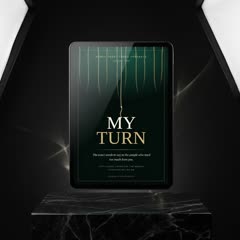
My Turn — Chapter One, You Are Not Tired. You Are Carrying People., is free and complete.
Read chapter one free →Common questions
What is the best book on setting boundaries?
Set Boundaries, Find Peace for most readers; Boundaries by Cloud and Townsend for a faith-based classic; My Turn for word-for-word scripts.
What is the best book for people-pleasers?
The Disease to Please for the why, When I Say No, I Feel Guilty for the techniques, and My Turn for ready-to-say scripts.
Can a book help if saying no feels impossible?
Often, especially one with exact words. If it feels impossible because you fear someone's reaction, talk to a professional.